MOROCCO STREETS / MOROCCO · المغرب
Morocco: the places and traditions behind the designs
Every Morocco Streets illustration starts from something real: a surf point, a mountain road, a teapot, a rug. These pages explain them — where they are, how they are made or used — and show the design each one became.
Places
 Place · Atlantic coast
Taghazout: Morocco’s surf village
Where Taghazout is, its main surf points from Anchor Point to Killer Point, the best season for waves and how to fit into village life.
Read ↗ Place · Atlantic coast
Banana Point and Aourir
Banana Point is a gentle right-hand point break at Aourir, north of Agadir, named after the banana plantations in the valley. What to know before you paddle out.
Read ↗ Place · Atlantic coast
Essaouira: wind, ramparts and Gnawa music
Essaouira’s 18th-century medina, the trade winds that bring windsurfers and kitesurfers, and the Gnawa music celebrated at its June festival.
Read ↗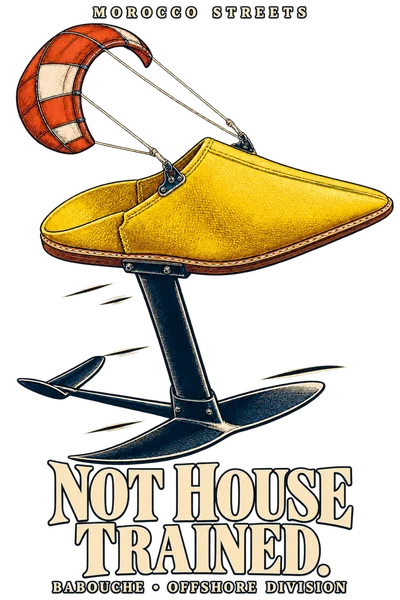 Place · far south
Dakhla: the lagoon and the wind
Why Dakhla’s lagoon is one of the world’s best-known kitesurfing spots: flat water, steady trade winds, and what else to see on the peninsula.
Read ↗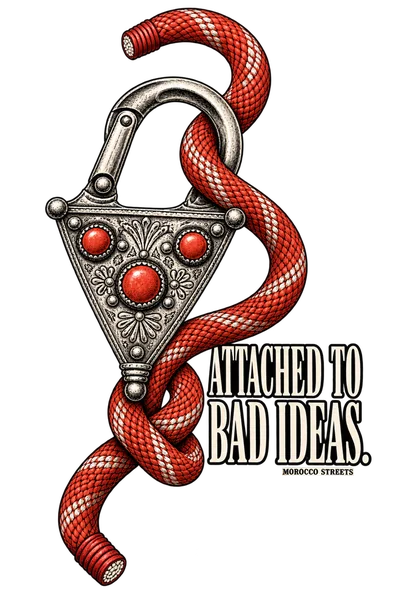 Place · mountains
The High Atlas: Toubkal, mountain roads and Amazigh silver
Jbel Toubkal, the passes over the High Atlas, life in Amazigh mountain villages, and the triangular silver fibula behind the Attached to Bad Ideas design.
Read ↗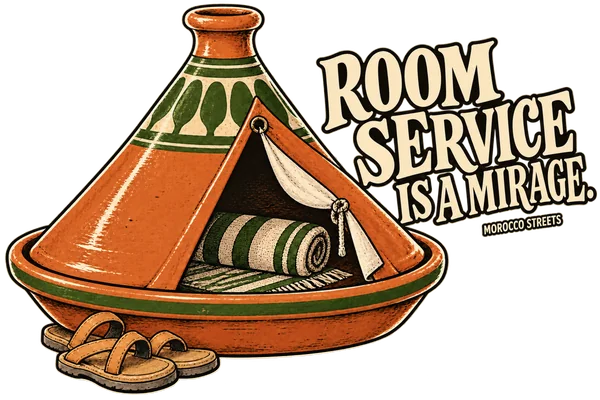 Place · desert
Merzouga and the dunes of Erg Chebbi
Erg Chebbi’s 150 m dunes, how to reach Merzouga, nights in a desert camp, and the tagine behind the Room Service Is a Mirage design.
Read ↗Traditions
 Tradition · tea
Moroccan mint tea and the berrad
What goes into Moroccan mint tea, how it is brewed and poured from a height, the berrad teapot, and the history of tea in Morocco.
Read ↗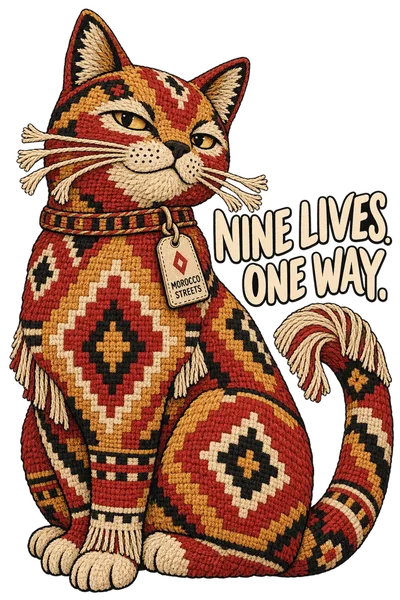 Tradition · weaving
Moroccan rugs: pile, flatweave and rag
The main families of Moroccan rugs — Beni Ourain and Azilal pile rugs, flatweaves and boucherouite rag rugs — who weaves them and where to see them.
Read ↗ Tradition · music
Gnawa music: the guembri, the qraqeb and the lila
Where Gnawa music comes from, the guembri and qraqeb that drive it, the all-night lila ceremony, and the Essaouira festival that took it worldwide.
Read ↗ Tradition · bathing
The Moroccan hammam: steam, black soap and the kessa
How a Moroccan hammam works, from the hot rooms to black soap, the kessa glove and ghassoul clay, and how to visit a public bath.
Read ↗ Tradition · metalwork
Moroccan lanterns: light through pierced metal
How Moroccan metalworkers make pierced brass and copper lanterns, why the patterns matter once the light is on, and where to see the workshops.
Read ↗ Tradition · the sea
Moroccan sardines: from the Atlantic to the tin
Why Morocco leads the world in canned sardines, the ports that land them, and how sardines are eaten along the coast.
Read ↗ Tradition · woodwork
Moucharabieh: carved wooden screens and the art of seeing
What a moucharabieh is, how wooden lattice screens bring shade, air and privacy, and where to see Moroccan woodwork.
Read ↗ Tradition · science
The astrolabe: Moroccan instruments for reading the sky
What an astrolabe is, how Moroccan timekeepers used astronomy to set prayer times, and where historic Moroccan astrolabes survive.
Read ↗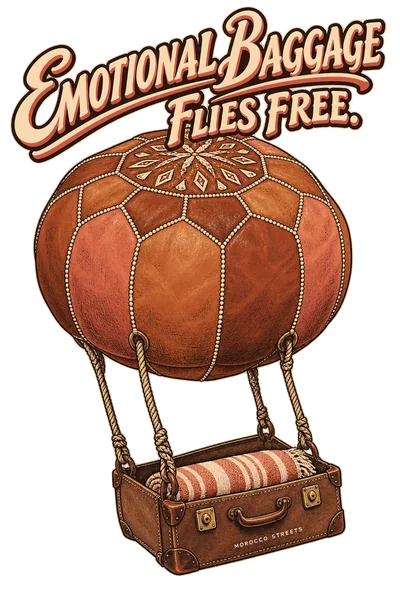 Tradition · leather
The tanneries of Fes and Moroccan leather
How hides are tanned and dyed in the stone vats of Fes, what Moroccan leather becomes — babouches, bags, poufs — and how to visit the tanneries.
Read ↗ Tradition · dress
The fez: the red hat named after a Moroccan city
Where the fez hat comes from, why it is linked to the city of Fes, how it spread through the Ottoman world, and when it is worn in Morocco today.
Read ↗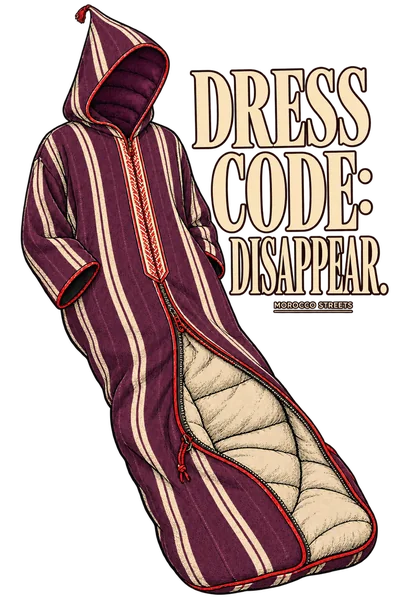 Tradition · dress
The djellaba: Morocco’s hooded robe
What a djellaba is, what its pointed hood is for, the fabrics for summer and winter, and how men and women wear it today.
Read ↗ Tradition · basketry
Doum palm weaving: baskets, mats and panniers
The dwarf fan palm called doum, the baskets, mats and panniers woven from its leaves, and why doum baskets came back after Morocco’s plastic bag ban.
Read ↗