Tradition · music
Gnawa music: the guembri, the qraqeb and the lila
Gnawa is a Moroccan tradition of music, dance and ritual whose roots lie with people brought from sub-Saharan Africa through slavery and the slave trade. Its sound — a deep three-stringed bass lute and the clatter of iron castanets — is one of the most recognisable in North Africa.
Published
Roots
UNESCO, which added Gnawa to its Representative List of the Intangible Cultural Heritage of Humanity in 2019, describes it as a set of musical events, performances, fraternal practices and healing rituals that mix the secular with the sacred. It grew among communities descended from enslaved people, at least from the 16th century, and absorbed Sufi devotion along the way.
The instruments
The guembri, also written gimbri or sintir, is a long-necked lute with a wooden body covered in skin and three gut strings. It is played by the maalem, the master musician, who leads the group and sings.
Around him, musicians play qraqeb, pairs of large iron castanets held in each hand, and answer his calls. The steady, hypnotic rhythm is meant to carry listeners for hours.
The lila
The central ceremony is the lila, an all-night gathering of music, incense, colours and dance in which participants may enter trance. It moves through a sequence of spirits and saints, each with its own songs and colours. Lilas are held in homes and in the lodges of the brotherhoods, for healing, blessing or celebration.
From ritual to festival
Gnawa musicians have long played in public too, in squares such as Jemaa el-Fna in Marrakech. Since 1998 the Gnaoua and World Music Festival in Essaouira has brought the masters on stage with jazz, blues and other musicians, and Gnawa has become a meeting point for musicians from around the world.
From qraqeb to crab claws
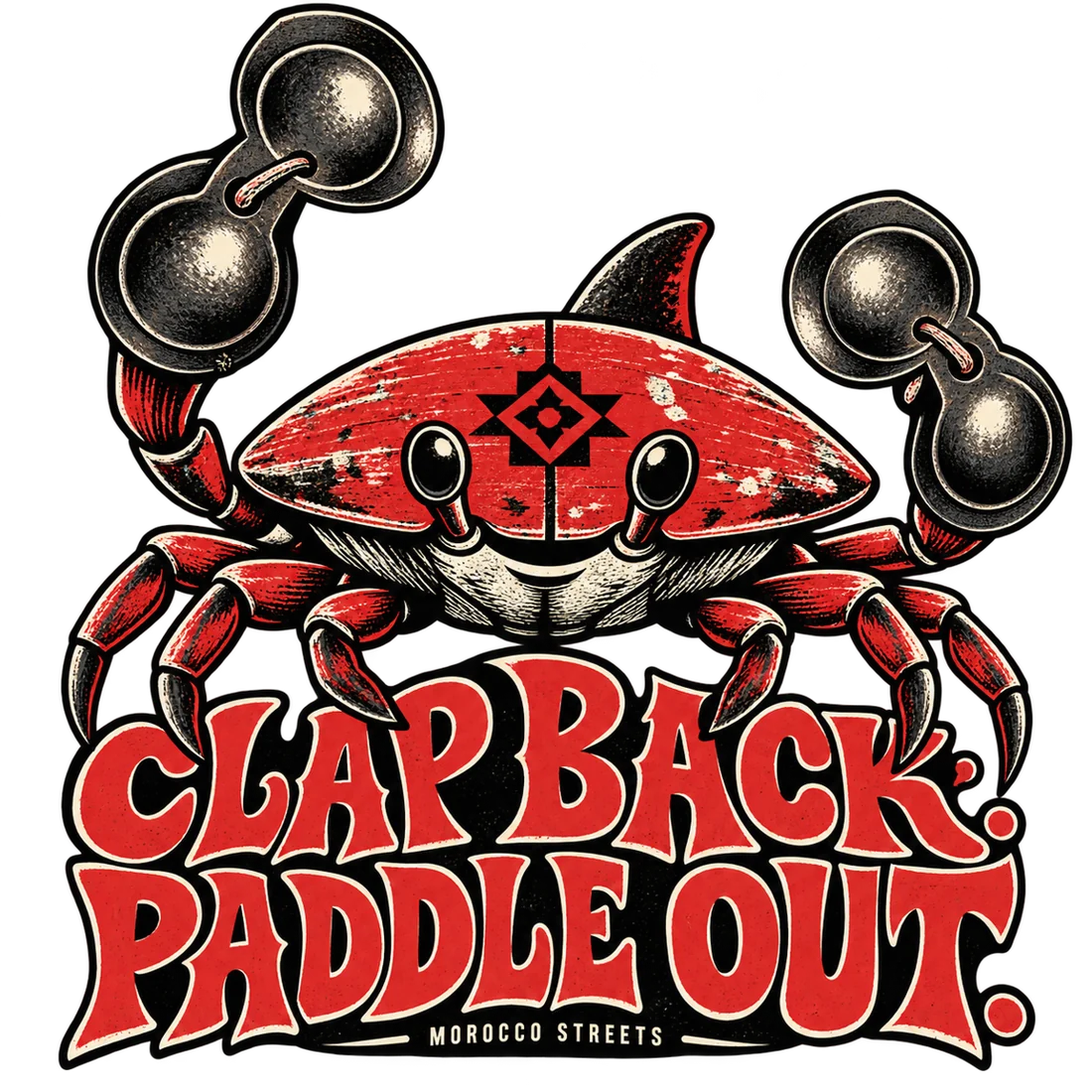
The Clap Back design turns a pair of Gnawa qraqeb into the claws of a crab: the metallic percussion of the ceremony reimagined as a character from the coast.
Sources
More from Morocco
 Tradition · bathing
The Moroccan hammam: steam, black soap and the kessa
How a Moroccan hammam works, from the hot rooms to black soap, the kessa glove and ghassoul clay, and how to visit a public bath.
Read ↗ Tradition · metalwork
Moroccan lanterns: light through pierced metal
How Moroccan metalworkers make pierced brass and copper lanterns, why the patterns matter once the light is on, and where to see the workshops.
Read ↗ Tradition · the sea
Moroccan sardines: from the Atlantic to the tin
Why Morocco leads the world in canned sardines, the ports that land them, and how sardines are eaten along the coast.
Read ↗