Tradition · leather
The tanneries of Fes and Moroccan leather
In the medina of Fes, leather is still tanned and dyed by hand in open-air stone vats. The Chouara tannery, the largest in the city, is one of the most photographed scenes in Morocco.
Published

The vats
Hides are first softened in vats of water, quicklime, salt and pigeon droppings, then moved to pits of dye. The whole process takes about a month, and much of it is still done by hand, with workers standing in the vats.
How old are they?
Local tradition links the tanneries to the early centuries of Fes, and Chouara is often called one of the oldest tanneries in the world. Historical records are less precise, but in the 14th century the old city had dozens of tanneries; three remain today.
From hide to pouf
After drying, the leather goes to workshops across the medina, where it becomes babouches, bags, belts and poufs. A leather pouf is sewn from panels of goat or sheep leather, often embroidered, and is usually sold flat, to be stuffed at home.
Visiting
The vats are best seen from the terraces of the leather shops around them. Shops usually let visitors climb up in the hope of a sale and often hand out a sprig of mint to hold against the smell. Mornings, when the vats are busiest, are the best time to go.
From pouf to hot-air balloon
The Emotional Baggage design turns a stitched leather pouf into a hot-air balloon: a Moroccan interior object lifted into the sky for a journey that carries its own baggage.
Sources
More from Morocco
 Tradition · dress
The fez: the red hat named after a Moroccan city
Where the fez hat comes from, why it is linked to the city of Fes, how it spread through the Ottoman world, and when it is worn in Morocco today.
Read ↗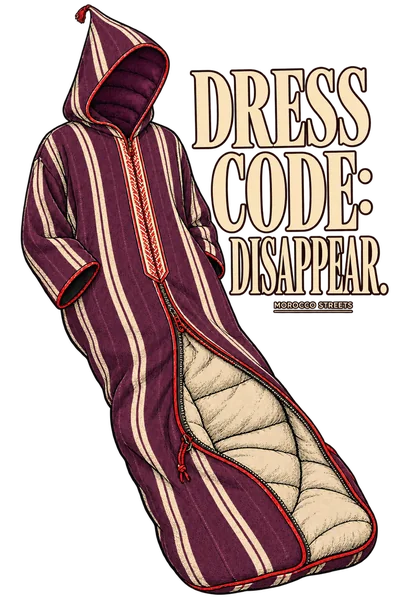 Tradition · dress
The djellaba: Morocco’s hooded robe
What a djellaba is, what its pointed hood is for, the fabrics for summer and winter, and how men and women wear it today.
Read ↗ Tradition · basketry
Doum palm weaving: baskets, mats and panniers
The dwarf fan palm called doum, the baskets, mats and panniers woven from its leaves, and why doum baskets came back after Morocco’s plastic bag ban.
Read ↗